
Miami-Dade County, from Aventura to Homestead
Mold Assessment for Miami-Dade Condos, Townhouses and Homes
You found a dark edge in the AC closet, a ring on the ceiling under the unit above, or a smell waiting at the door after the summer, and you want to know what it is, whose water fed it and how big the job is, from a licensed assessor who will not be the one removing it.
Mold Assessment quote
Say where the stain or the smell is, what sits above or behind it, and whether it is a condo or a house. That settles whether you need an assessor, a plumber, or a word with the association.
Would you rather talk it through? Call (315) 640-3590.
$100 off your first job
Credited by us on your first booked job.
- One credit per customer per property, on your first booked job.
- Valid through December 31, 2026.
Mention this offer when you book. Full terms.
What a Miami-Dade assessment report puts on paper
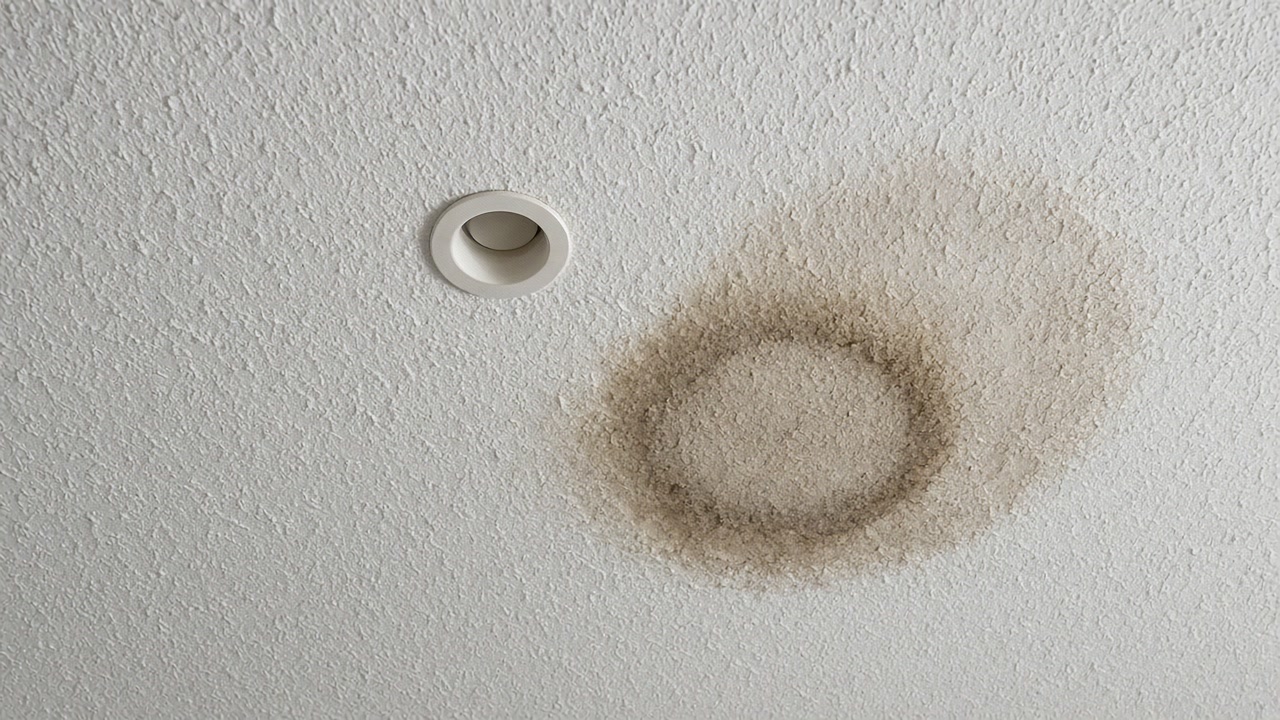
It usually starts small: a dark edge along the drywall in the AC closet, a brown ring on the ceiling under the unit above, or a musty smell that met you at the door when you came back in the fall. An assessment turns that into a written answer. It records where the growth is and how far it runs, what water fed it, where that water came from, and what a removal would have to include, with moisture readings and photographs behind every line. In a condo it also says which side of the unit line the source sits on, which is the first thing the association will ask. Florida gives you a reason to trust the page: under section 468.8419 a company that assesses a structure may not remediate it for the next 12 months. We arrange a licensed assessor whose fee does not grow with the removal, and any removal goes to a different company.
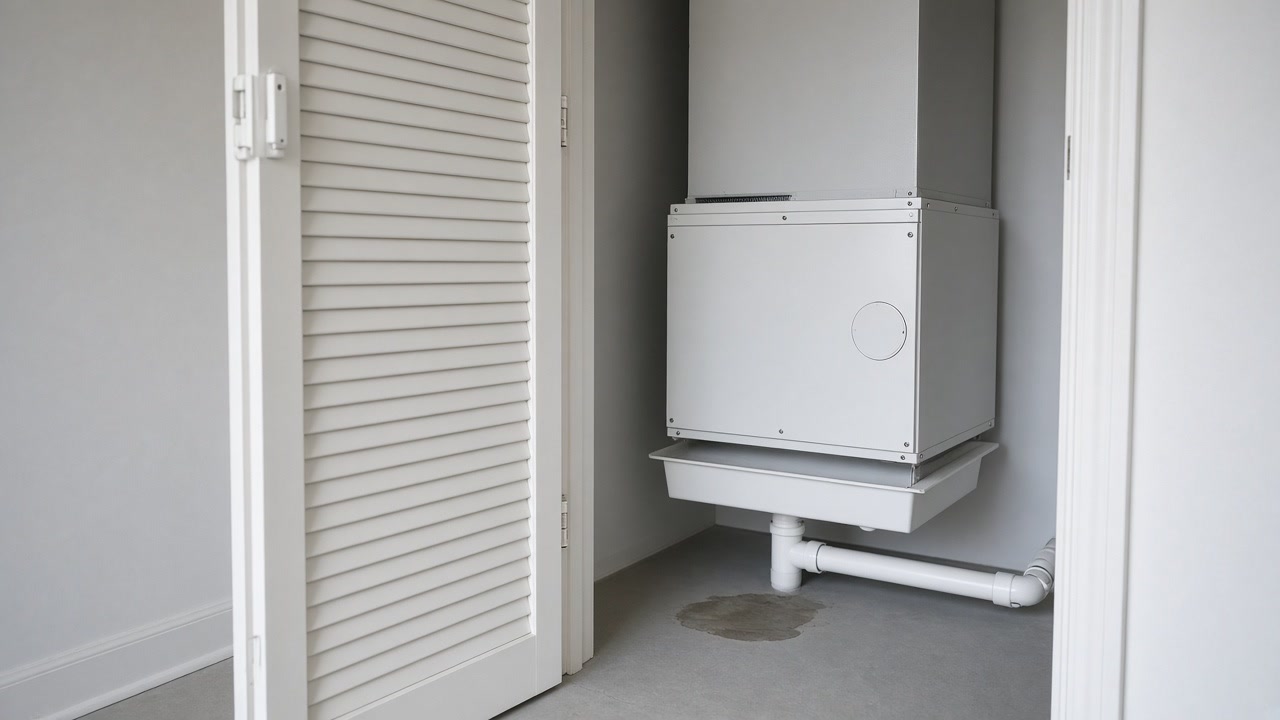
- A walkthrough that starts where Miami-Dade growth usually starts: the air handler closet, its platform, the drip pan and the condensate line, then the bathrooms, the windows and sliders, and the ceiling under any unit above
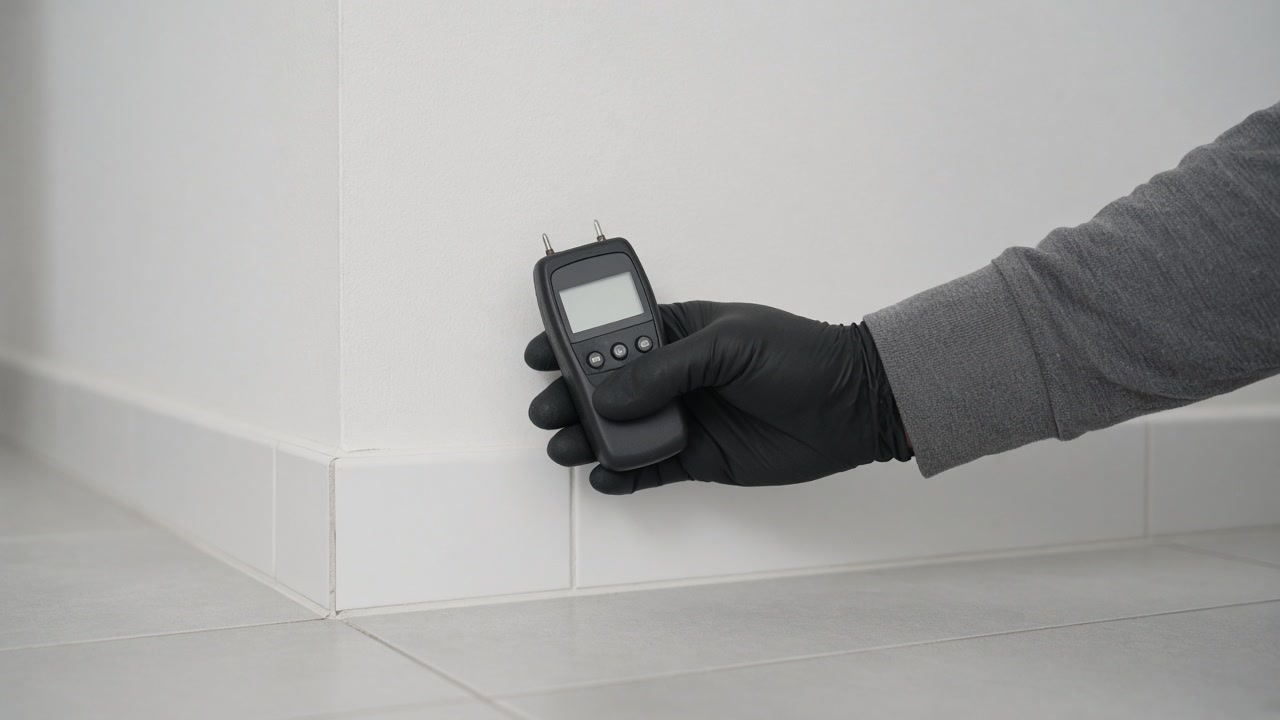
- Moisture mapping with pin and pinless meters and thermal imaging behind drywall, baseboards and cabinet toe kicks, to find the edge of the wet rather than the edge of the stain
- Tracing the water to its source: the unit's own AC, a supply line or water heater, a window frame, block wall and stucco, or a neighbor's plumbing on the other side of the ceiling
- Reading how the wall is built, since drywall on wood furring strips over concrete block hides growth on the cavity side of the board, where no flashlight reaches
- Indoor relative humidity and temperature logged in each affected room and compared against EPA's advice to keep indoor humidity below 60 percent
- Measuring the affected area, because square footage decides whether Florida's mold license law applies to the job at all
- Air or surface sampling only where a result would change the plan, which is not most visits when the growth can already be seen
- A written remediation protocol a separate remediator can price: the areas, the containment, what is removed, what is cleaned, and the repair that stops the water
- A report shaped for whoever reads it next: the association, a buyer, a lender, an insurer or a landlord
- Post-remediation verification by an assessor who had no part in the removal
Condo, townhouse or house: what widens a Miami-Dade assessment
Two stains of the same size can need very different visits. What changes the job is the kind of building, where the water crossed in from, and who is going to read the report.
Whether you live in a condo, a townhouse or a detached house
In a detached house the assessor follows the water inside one owner's walls. In a stacked building the source can sit in the unit above, behind a shared wall or in a common element, and the visit may need the association's help to reach it. The ACS estimates put 44.8 percent of Miami-Dade housing units in buildings of five or more units, so this is the first question here, not an edge case.
Which side of the unit line the source sits on
Florida's condominium act makes the unit owner responsible for insuring the floor, wall and ceiling coverings, water heaters and appliances inside the unit. A finding that names the source and lists what it damaged maps straight onto that split, which is why the report records both rather than the stain alone.
Whether the air conditioning was running
EPA's mold course notes that one job of an HVAC system is taking moisture out of the air, and that when it is switched off, humidity can rise greatly. A unit left with the AC off, set high, or with a blocked condensate line can grow mold with no leak at all, and the assessor needs to know which of those it was.
How much growth there is
Florida defines a mold assessment as work on growth of more than 10 square feet. Below that line the law does not require a licensed assessor, and the honest advice may be a bucket and a fixed drain line. Above it, the report is licensed work and the removal will be too.
When you found it, and whether the association knows
Section 718.111(11)(j) says the association is not obliged to pay for losses a unit owner knew or should have known about and did not report until after the association's own claim was settled or denied as late. A dated report delivered early protects that position.
Whether a lab number would change anything
EPA's guidance is that sampling is usually unnecessary when mold can be seen, and that no federal limits exist to test a building against. Sampling earns its fee where growth is suspected but hidden, or where a buyer, a lender or an insurer has asked for it.
How old the building is
The ACS estimates say 49.6 percent of the county's housing units were built before 1980. An older building has more history behind its finishes, earlier leaks and earlier patches, and an assessor allows time to tell old staining from new.
Stain under the unit above? Start with whose water it was
Tell us where the mark is and what is on the other side of it. The reply says whether this needs a licensed assessor, a trade to stop the water, or the association, and asking carries no obligation.
From the AC closet to a protocol a different company prices
Tell us the building, the room and the timeline
Condo, townhouse or house, where the mark or the smell is, what sits above or behind it, and when you first noticed. That is enough to judge whether this needs an assessor, a plumber first, or the association.
Sign a written contract before the visit
Florida requires a mold assessment contract to be in writing and signed by both sides, and says it does not have to estimate the cost of repair. Pricing the repair belongs to the remediator, working from the protocol.
Walk the unit and map the moisture
The assessor logs what can be seen and smelled, then maps readings outward from the worst spot until the materials read dry, so the report shows the real extent and not the visible one.
Follow the water to where it started
The AC closet, the plumbing, the windows, the walls and, where needed, the unit above or a common area with the association's cooperation. The source is named in the report, with the readings that prove it.
Sample only if a result would change the plan
Where growth is visible it is usually skipped. Where it is suspected but hidden, or a third party has asked for it, the samples are taken and the lab results attached.
Receive the report and the remediation protocol
Photographs, readings, a marked-up floor plan, the source, and a written scope for removal that any licensed remediator can price.
Removal by a separate company, then verification
A different licensed remediator does the removal. Afterward an assessor with no part in that work checks the space against the protocol before anything is closed up.
What mold assessment looks like

Where the assessor stops, and when a small patch needs nobody licensed
When you may not need this at all
- If the patch is smaller than about three feet by three feet and the water that fed it has stopped, Florida's mold license law does not reach the job: both licensed activities are defined as work on more than 10 square feet. EPA says a patch that size is usually one you can handle yourself, so you may not need a licensed anyone.
- If it got wet in the last day or two and nothing has grown yet, this is a drying job first. An assessment can wait until the materials have been measured dry.
- If the water came from the building itself, a roof, a riser or a common wall, the association maintains the common elements under section 718.113(1) and may commission the assessment. Ask the manager before you pay for one.
- If you own the house and want to look for yourself first, section 468.841 exempts a residential owner assessing their own property. A moisture meter and a flashlight answer more than people expect.
- If the source is known, already fixed, and the growth is small and visible, a lab test will not tell you anything new.
What is out of scope
- Removing any material. The removal goes to a different licensed company, because Florida bars the assessing company from remediating the same structure for 12 months.
- Repairing the source. Plumbing, AC and roofing repairs belong to those licensed trades.
- A price for the repair. Florida does not require an assessment contract to include one, and the remediator prices against the protocol.
- Structural or milestone inspections of a condo building, which are for an engineer or architect under section 553.899.
- Legal advice on who pays, and advice on how to run an insurance claim.
- Any medical opinion about the people living in the unit.
Mold assessments arranged from Aventura to Homestead
- Mold Assessment in Miami
- Mold Assessment in Hialeah
- Mold Assessment in Miami Gardens
- Mold Assessment in Miami Beach
- Mold Assessment in Coral Gables
- Mold Assessment in North Miami
- Mold Assessment in Doral
- Mold Assessment in Aventura
- Mold Assessment in Kendall
- Mold Assessment in Palmetto Bay
- Mold Assessment in Opa-locka
- Mold Assessment in Sweetwater
Assessment questions Miami-Dade owners and tenants ask first
The inspector offered to do the removal too. Is that allowed?
Usually not. Section 468.8419 says a mold assessor may not remediate a structure the assessor's company assessed within the last 12 months, and the remediator is barred from the reverse. There is one exception, for a general, building or residential contractor holding a statewide state license, which the next question covers. We do not use it: the assessor we arrange does not remove, whatever the size of the job.
What if a general contractor offers to assess and remove?
The 12-month bar does not apply to what the statute calls a Division I contractor: a general, building or residential contractor licensed statewide. Florida marks statewide contractor licenses with a code starting in C, and a locally registered contractor, whose code starts with R, does not appear to qualify. The law lets the state require that such a contract disclose your right to request competitive bids. Whether or not it says so, ask for competing bids in writing before you sign.
The association says it is my problem. Who should hire the assessor?
It depends on where the water came from and on your declaration. The association maintains the common elements, and the unit owner insures the finishes inside the unit. A report that names the source is how that question gets settled, so tell the association in writing as soon as you find the damage and ask whether it intends to commission the assessment itself.
Is this black mold, and do I need a test to find out?
The color does not identify the species, and the species rarely changes what gets removed. EPA's position is that sampling is usually unnecessary when growth is visible, and that no federal limits exist to test against. An assessor will sample where a hidden area is suspected or someone else has asked for results.
How do I check that an assessor is licensed?
Florida's Department of Business and Professional Regulation issues a separate Mold Assessor license, and you can search a name on its license lookup. The law also requires a licensed assessor to carry at least $1 million of general liability and errors and omissions coverage, so it is fair to ask for proof of both.
Will the report tell me what my insurance pays?
No, and nobody honest will promise that. The report documents the source, the extent and the scope, which is what a policy is read against. What it pays is in your declarations page. Citizens' own homeowners and condo forms set fungi coverage at $10,000; read yours for your own limit.
Get the finding before anyone prices a removal
A few lines about the room, the building and when you noticed are enough. A person reads it and writes back with what the job actually needs, and nobody asks you to sign anything about your insurance.