
Water Damage Drying in Miami When the Unit Above Leaks
A drying crew finds where the wet ends, dries the ceiling, wall and floor in place where the readings allow, and logs it daily, so a leak from the unit above stays a leak and does not become a removal.
Water Damage Drying quote in Miami
Tell us what you can see or smell, where it is, and whether it is a condo or a house. Those three answers decide who you need and who is likely responsible, which matters more here than the size of the stain.
Would you rather talk it through? Call (315) 640-3590.
$100 off your first job
Credited by us on your first booked job.
- One credit per customer per property, on your first booked job.
- Valid through December 31, 2026.
Mention this offer when you book. Full terms.
Why a Miami ceiling leak starts a two-day drying clock
In a City of Miami tower the water most often arrives from somewhere you do not control. 48.8 percent of the city's housing units are in buildings of 20 or more, so a bathtub overflow, a failed water heater or a blocked condensate line two floors up can reach your ceiling before anyone upstairs knows. EPA's guidance is to dry water-damaged areas within 24 to 48 hours to prevent mold growth, and that clock starts when the water reaches you, not when the neighbor answers the door. Stop what you can, photograph the ceiling, and get the readings started.
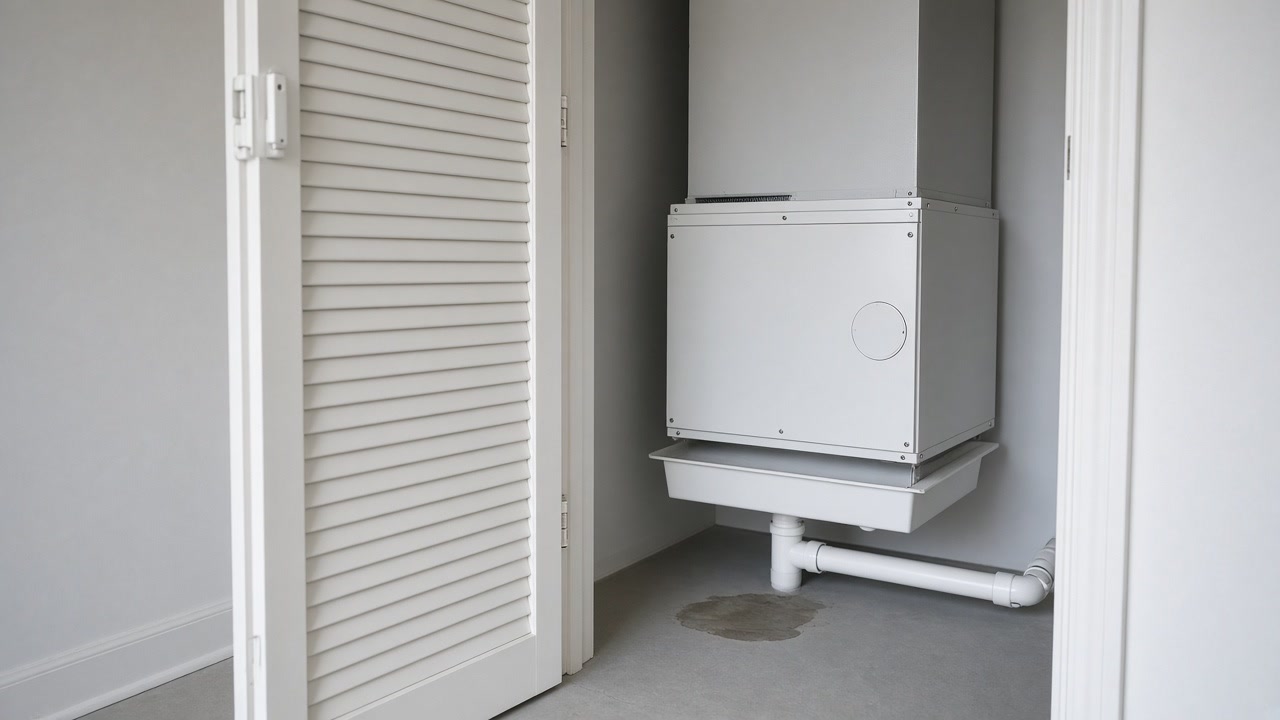
What water damage drying involves in Miami
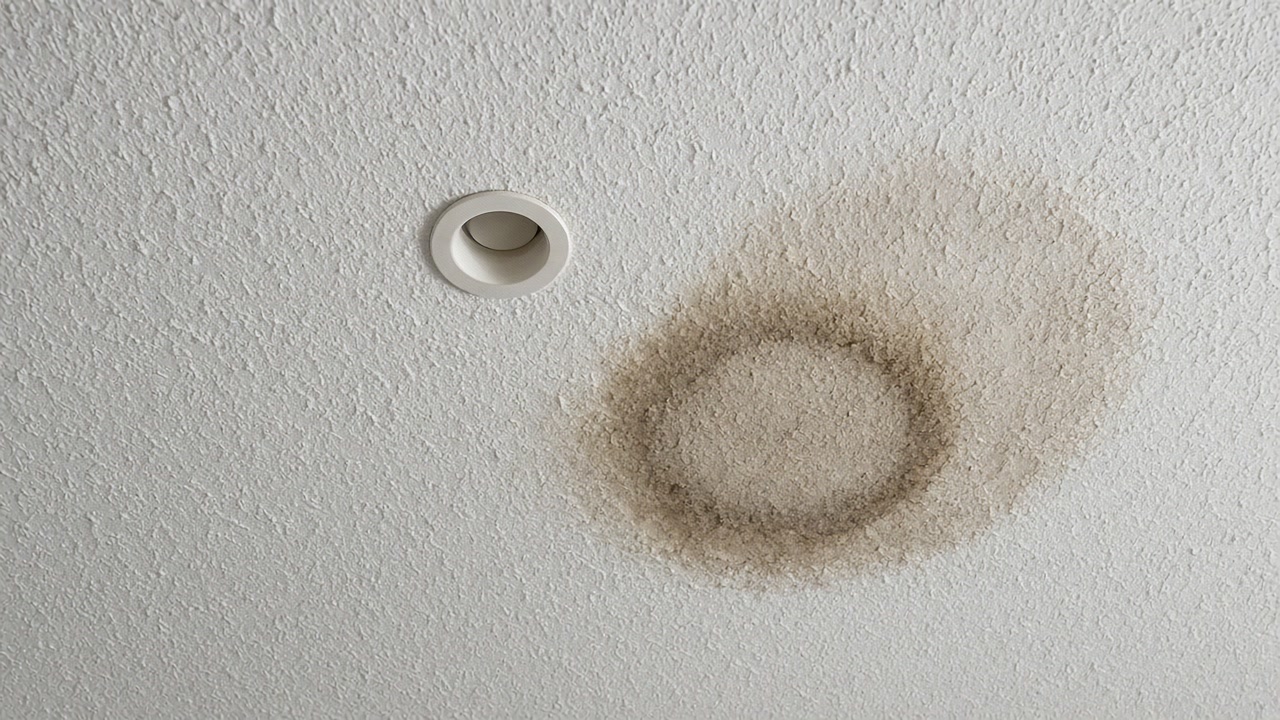
Clean or dirty, yours or upstairs: Miami drying decisions
Two things decide the job before the equipment does. First, the category of the water: a supply line is clean, while a backed-up drain carries whatever went down it and changes what can be dried in place. Second, whose water. Florida's condominium act makes an owner responsible for repair costs insurance does not pay where the damage came from that owner's negligence or failure to follow the rules, so a dated note to the manager naming the unit above, with photographs, is worth more than any argument afterward. If you rent, send the same note to your landlord.
Clean water or not
A supply line or a water heater is clean water. A drain, a toilet or anything that ran across a floor first is not, and porous material it soaked is more likely to come out.
How many hours it has been
Inside the first day or two, drying in place is usually realistic. After that, ask for moisture readings before anyone promises the drywall can stay.
Who has been told
The manager, the unit above and, if you rent, your landlord, each in writing with the time you found it.
Miami tower living and the drying window, from public sources
The City of Miami has 223,826 housing units in the ACS 2020 to 2024 estimates. 48.8 percent are in buildings of 20 or more units and 22.4 percent are single-family detached. 69.2 percent of occupied units are renter occupied. 7.8 percent of units were built in 1939 or earlier and 50.8 percent before 1980.
Source: US Census Bureau, American Community Survey 2020 to 2024 5-year estimates, table DP04 Selected Housing Characteristics, Miami city, Florida, accessed 2026-09-23
EPA: 'It is important to dry water-damaged areas and items within 24-48 hours to prevent mold growth.' And: 'If the moldy area is less than about 10 square feet (less than roughly a 3 ft. by 3 ft. patch), in most cases, you can handle the job yourself'; where there has been a lot of water damage or growth covers more than 10 square feet, EPA points readers to its guidance for larger buildings.
Source: US Environmental Protection Agency, A Brief Guide to Mold, Moisture and Your Home, accessed 2026-09-23
Section 718.111(11)(j)1 makes a unit owner 'responsible for the costs of repair or replacement of any portion of the condominium property not paid by insurance proceeds if such damage is caused by intentional conduct, negligence, or failure to comply with the terms of the declaration or the rules of the association' by the owner, family, occupants, tenants, guests or invitees. Paragraph (j)2 extends that to other owners' personal property.
Source: The Florida Senate, 2025 Florida Statutes, Chapter 718 Condominiums, section 718.111(11)(j)1 and 2, accessed 2026-09-23
The Local Mitigation Strategy counts 209 residential and 29 commercial repetitive loss properties in the City of Miami in 2024. Of the 147,232 buildings the plan maps in the city, 62,364, about 42 percent, are in FEMA special flood hazard zones A, AE, AH or VE, including 3,864 in the coastal high hazard VE zone.
Source: Miami-Dade County Local Mitigation Strategy, Part 5: NFIP and CRS (September 2025), Tables 8 and 12, accessed 2026-09-23
Is the Miami ceiling still dripping?
Say when it started, which unit it came from and whether it is still wet. The reply sets out drying first and paperwork second.
If the Miami drying comes too late: assessment and removal
Miami questions about water from above and below
The water came from the Miami unit above mine. Who pays for the drying?
It depends on the cause and the building's declaration. Florida's condominium act puts repair costs not paid by insurance on an owner whose negligence caused the damage, so record the cause in writing. We do not give claim advice; read your own policy and the declaration, and ask the manager what the association will cover.
I am on a ground floor and the water came in after rain. Is it the same job?
The drying is similar and the paperwork is not. About 42 percent of the city's mapped buildings are in a FEMA flood zone, and water that entered from outside may fall under a flood policy with its own rules. Say which it was when you send the details, so the reply covers the right one.
Tell us what got wet in the Miami unit
The room, the source and the hour you found it. A person reads it and writes back, and asking costs you nothing.